
Growing Practices & Food Safety
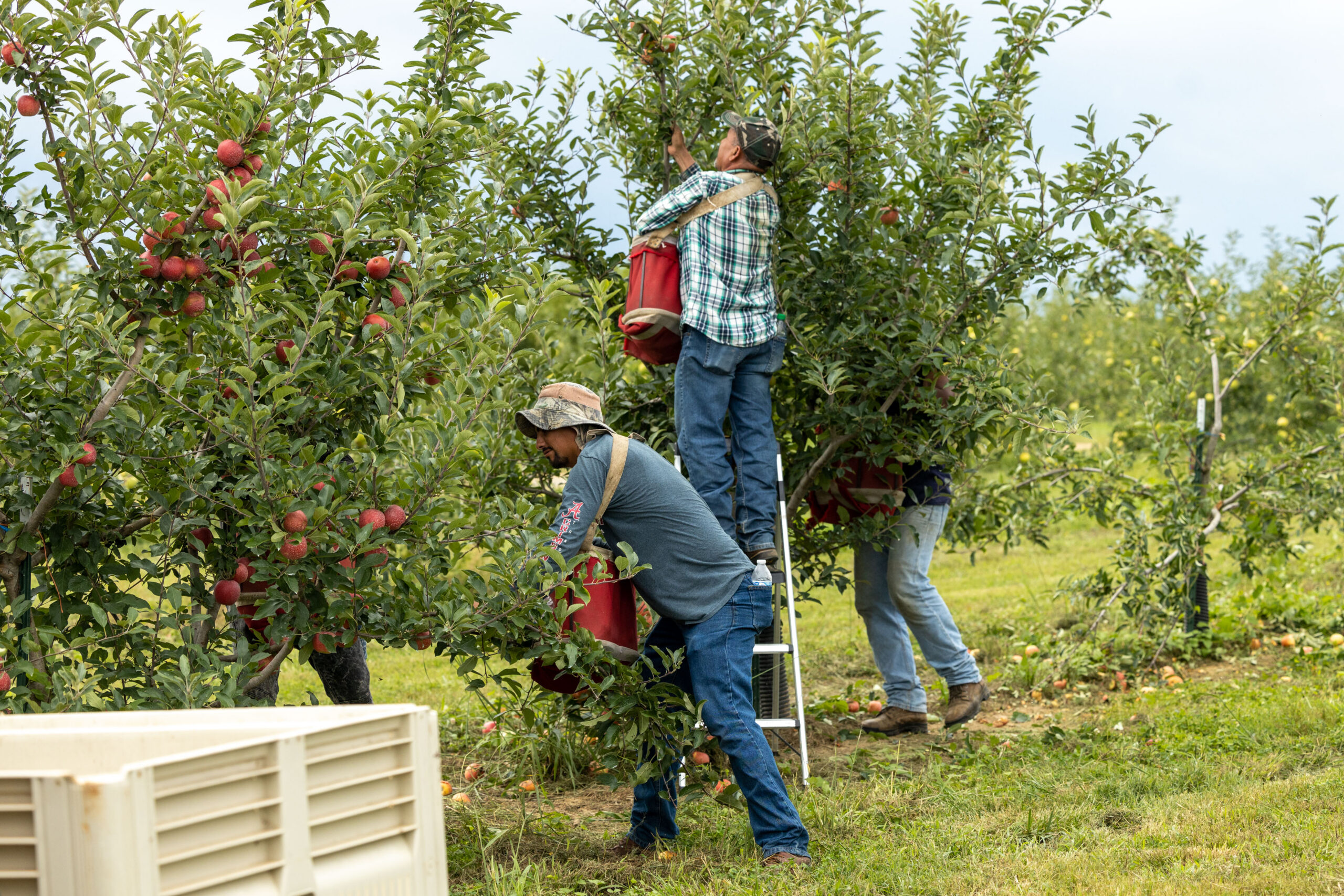
At Scott’s Orchard, food safety starts with family. For five generations, the Scott family has grown, picked, graded, and sold every apple and peach themselves, which means the same people who care for the trees are the ones standing behind the fruit you buy. Here’s how we grow, protect, and hand-pick the produce that reaches your table.
Five Generations of Careful Growing
Scott’s Orchard began in 1901 when Thomas M. Scott, Jr. and his wife Viola started farming their original 233 acres in Hazel Green, Alabama. More than a century later, that same land, now recognized as a Tennessee Century Farm for over 100 years of continuous agricultural production, is still farmed by the Scott family. Today, the farm has grown to include 100 acres of apples (18 varieties) and 50 acres of peaches (20 varieties), alongside corn, soybeans, watermelons, pumpkins, tomatoes, and peppers.
That kind of longevity doesn’t happen by accident. When a farm has been passed down through five generations, safe and responsible growing isn’t a marketing checkbox, it’s how the family has always done business, because their name, their land, and their community are all on the line every season.
How We Protect Our Crops: Integrated Pest Management (IPM)
Scott’s Orchard is a conventional farm, and we’re upfront about that. To keep our trees healthy and our fruit blemish-free, we follow an Integrated Pest Management (IPM) program, a science-based approach that treats spraying as a last resort, not a routine.
Instead of spraying on a fixed schedule, our team relies on:
- Weather models and forecasts to predict when pest or disease pressure is actually likely
- Computer-based tracking tools that monitor conditions across the orchard in real time
- Visual field observation, so decisions are based on what’s actually happening in the trees, not guesswork
This means we only apply targeted treatments for specific, identified threats, reducing unnecessary spraying while still protecting the crop from the pests and diseases common to the Southeast. It’s a balance between growing healthy, market-quality fruit and being responsible stewards of the same land our family has farmed for over 120 years.
From the Tree to Your Bag: How We Handle Our Fruit
Freshness and food safety go hand in hand, and it starts with timing:
Fruit is grown, picked, and packed by our own family and crew, there’s no long supply chain between the orchard and the checkout counter.
Peaches are picked the morning of or the day before they’re sold, never sitting in long-term storage before reaching our customers.
Every apple passes through our on-site grading process, where fruit is inspected so that only the best of the harvest is packaged for sale. Visitors during apple season can watch the grading machine in action and see exactly how fruit is sorted before it reaches the stand.
A Farm That Follows the Rules
Because we grow food for the public, Scott’s Orchard operates under health department guidelines, which is also why, for example, outside animals are not permitted on the farm (with full accommodation for ADA-defined service animals). Rules like this exist to protect both our customers and the crop itself, and we take them seriously.
Land Stewardship for the Next Generation
A farm doesn’t last five generations without taking care of the ground it stands on. The same 233 acres Thomas and Viola Scott began farming in 1901 are still productive today, now part of a much larger operation still owned and worked by their descendants. Safe growing practices and long-term soil and land health go together, you can’t keep farming the same ground for over a century without protecting it along the way.
We truly appreciate your understanding, cooperation, and help in keeping Scott’s Orchard compliant with food safety regulations so we can continue to serve our community safely.
subscribe to our newsletter
Sign up for our newsletter to get “What’s Picking” alerts, bakery specials, and event announcements delivered straight to your inbox.